Septic Tank Pumping in Lakeland, FL
Septic tank pumping service in Lakeland, FL. Learn the warning signs, the process step by step, and how sandy soil and a high water table affect timing.
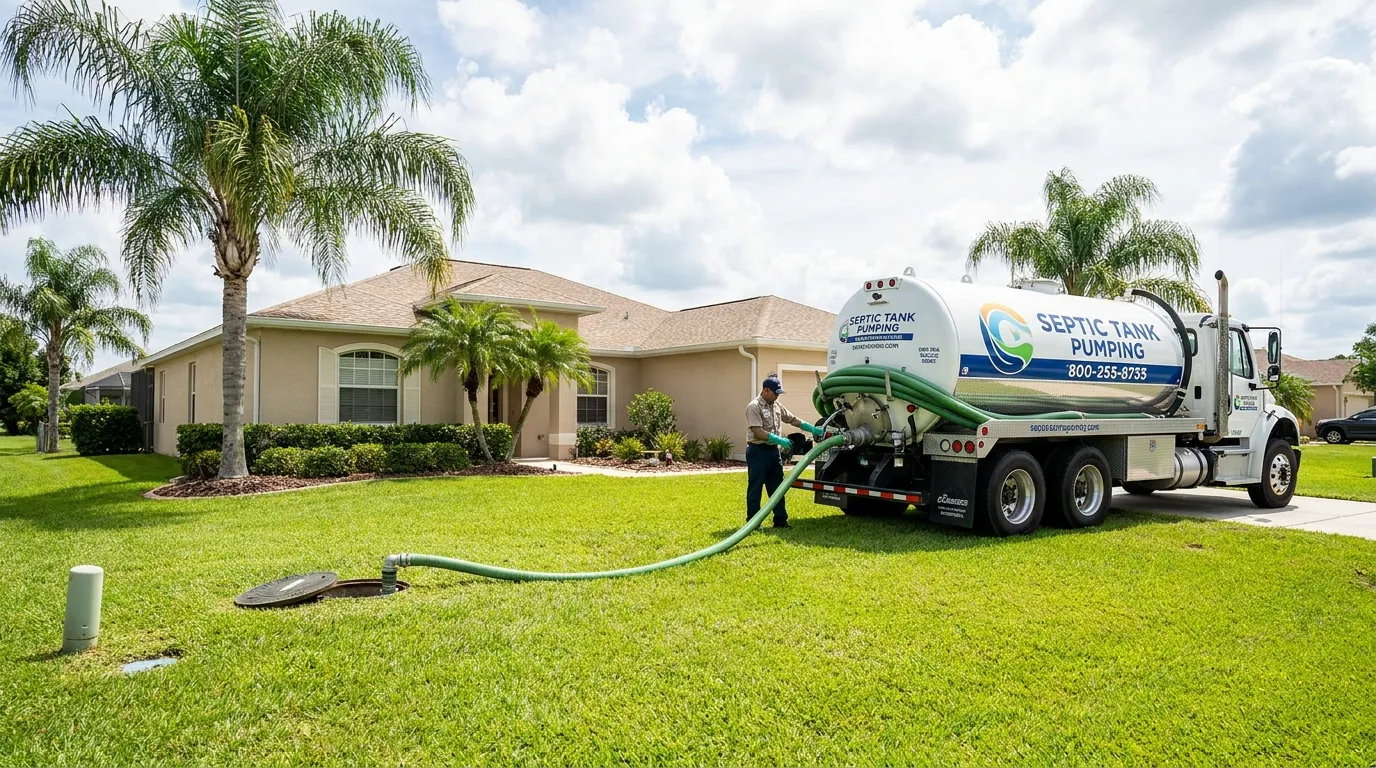
Why pumping matters here
A septic tank works by holding wastewater long enough for solids to settle to the bottom as sludge and for grease to rise to the top as scum. Only the relatively clear middle layer is meant to flow out to the drain field. Over time the sludge and scum layers grow, the settling space shrinks, and solids start escaping into the drain field where they clog the soil. Pumping removes those layers before that happens. That is the entire point of a septic tank pumping service: protect the far more expensive part of the system.
In Lakeland the local ground conditions push pumping to the front of every homeowner's maintenance list. Sandy soils drain quickly, which sounds helpful, but our high water table means the soil around many drain fields is already saturated for parts of the year. A saturated drain field cannot accept much effluent, so any solids that carry over from an overdue tank clog it faster than they would in drier ground. Pumping on schedule is the cheapest insurance you have.
If you are not sure whether your tank is due, a pump-out is also a good time to pair with a septic system inspection so the tank baffles, outlet, and sludge levels get a proper look while the lid is open.
Warning signs your tank needs pumping
The clearest signals show up at the fixtures and in the yard. Slow drains throughout the house, gurgling toilets, and sewage odors indoors or near the tank all point to a tank that is full or backing up. Lush, spongy grass over the drain field, standing water, or a sewage smell outside usually means solids have already reached the field.
Because Lakeland's water table rises with the summer rains, some of these symptoms flare seasonally. A system that drains fine in the dry spring can back up in August. If you notice repeated slow-downs after storms, read our guide on septic care during heavy rain and consider pumping before the wet season, not during it.
What a pump-out involves
A standard visit follows the same core steps, adjusted for your tank's size and access.
-
Locate and uncover the tank
We find the tank and expose the access lids. Many Lakeland homes have risers at grade; older properties may have lids buried under a few inches of sandy soil that we dig to.
-
Measure sludge and scum
Before pumping we check the depth of the sludge and scum layers. This tells us how overdue the tank was and helps set a sensible interval for next time.
-
Pump both compartments
The truck's vacuum removes the liquid, scum, and settled sludge from every compartment. A tank pumped only from one side is not fully pumped.
-
Inspect while empty
With the tank empty we look at the inlet and outlet baffles, the tank walls, and the outlet filter if one is fitted. Failed baffles let solids straight into the field.
-
Backfill and note next service
We reseat the lids, backfill, and give you a realistic interval based on household size and what the sludge levels showed.
How to decide what to do next
If it has been more than three to five years, or you are seeing any of the warning signs above, schedule a pump-out. If the tank turns out to be in poor shape, pumping pairs naturally with septic tank cleaning for heavier buildup or drain field service if effluent is no longer draining. When a backup has already happened, that is a septic emergency service call rather than a routine one.
Call to schedule septic tank pumping anywhere in Lakeland and the surrounding towns. We will help you set an interval that fits your household and our soil.
Frequently asked questions
How much does septic tank pumping cost in Lakeland?
Cost depends on tank size, how overdue it is, and access to the lids. A neglected tank with heavy sludge or buried lids takes longer and costs more than a routine pump-out on a well-maintained system. Our article on pumping cost breaks down the drivers in more detail.
How long does pumping take?
A typical residential tank takes under an hour once the lids are exposed. Digging to buried lids, breaking up a thick scum crust, or pumping an oversized tank adds time.
Do you pump both compartments?
Yes. Most tanks have two compartments and both must be pumped from their own access. Pumping only one side leaves solids behind and shortens the time until your next service.
Will pumping fix my slow drains?
If the slow drains come from a full tank, pumping usually restores flow right away. If the drain field is saturated or clogged, pumping helps temporarily but the field itself needs attention, which we can assess during the visit.
Talk to someone about your job
Call to describe the problem and get a quote for work in Lakeland, FL.