Septic Tank Pumping in Lakeland, FL
Septic tank pumping, cleaning, inspection and drain field service for homes across Lakeland and the surrounding Polk County towns.
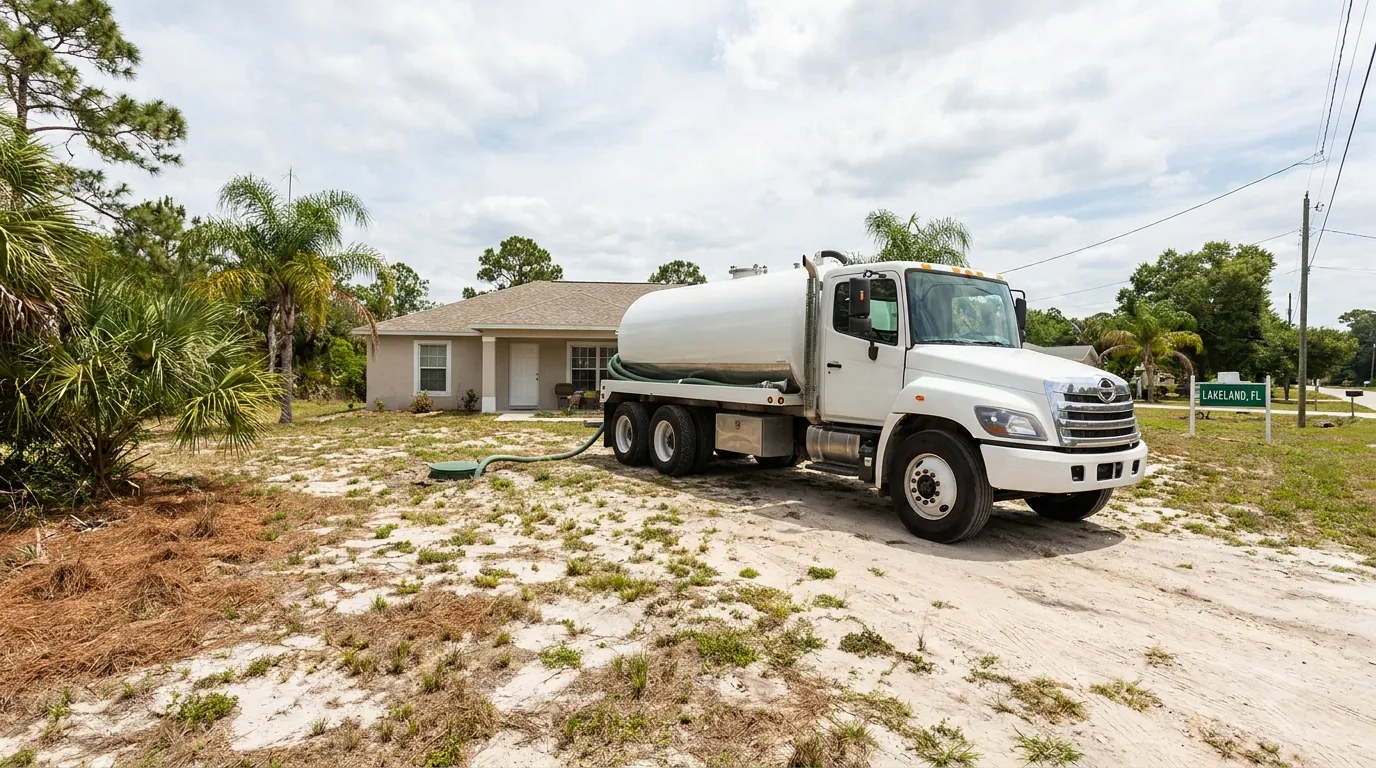
Septic Service Built for Lakeland Ground
If your home sits outside a city sewer line anywhere around Lakeland, your septic system quietly handles everything that leaves the house every day. It works fine until it doesn't — and in this part of Central Florida, the ground itself decides a lot about how often it needs attention. Lakeland's sandy soils, high humidity, and a water table that can sit close to the surface all change how a tank fills, how a drain field breathes, and how much warning you get before a problem reaches the yard or the house.
Lakeland Septic Solutions focuses on the maintenance and repair work that keeps a residential system running: routine septic tank pumping, tank cleaning, system inspections, drain field service, grease trap pumping, and emergency response when a system backs up. This site is written for homeowners who want to understand what the work involves and make good decisions about their own system — not for people who want to guess.
Most of the trouble we see traces back to two things: tanks that went too long between pumpings, and drain fields stressed by wet ground. Both are manageable when you know the local rhythm. Start with the service you need, or read our guide on how often to pump a septic tank if you are not sure where your system stands.
How Lakeland Soil and Water Change Septic Work
Septic systems live or die on how well the surrounding soil accepts water, and that varies sharply across Polk County. Much of the Lakeland area sits on sandy, well-draining soil, which sounds ideal — and in dry months, it is. Sand lets a drain field disperse water quickly. But sand also holds very little, so when the water table rises or a hard rain saturates the ground, that same fast-draining soil offers no reserve capacity. The field can flood from below, and effluent that should soak away instead sits.
The high water table is the factor most homeowners underestimate. In low-lying stretches and during the summer rainy season, groundwater can climb to within a few feet of the surface. When groundwater is high, your drain field has less unsaturated soil to work with, and a tank that is even slightly overfull can push solids into that field. This is why pumping on a sensible schedule matters more here than in drier, higher-and-dryer regions — the ground gives you less margin for error.
Humidity and heat play a quieter role. Warm, moist conditions keep the biological activity inside a tank running year-round, which is good for breaking down waste but does nothing to remove the solids that accumulate regardless. Those solids still have to be pumped out. Seasonally, the wettest months from roughly June through September are when stressed systems reveal themselves — slow drains, odors, and soggy spots over the field. If you notice any of that, our page on septic care during heavy rain explains what to watch and what to avoid.
The practical takeaway: your pumping frequency should reflect your household size, your tank size, and where your property sits relative to the water table — not a generic national number. A septic system inspection is the cleanest way to learn where your system actually stands.
Septic Services We Cover
Every service below is written for local conditions — sandy percolation, a shallow water table, and long humid summers that keep the ground wet.
-
Septic Tank Pumping
Scheduled removal of the sludge and scum that build up in your tank so solids never reach the drain field. The core service most Lakeland homes need every few years.
-
Septic System Inspection
A look at tank levels, baffles, and drain field behavior to catch small problems early — useful before a home sale or after signs of trouble.
-
Septic Tank Cleaning
A more thorough clean-out than a routine pump, breaking up and removing hardened solids and buildup from the tank walls and floor.
-
Drain Field Service
Diagnosis and care for the part of the system that actually returns water to the soil — the part most affected by Lakeland's high water table.
-
Grease Trap Pumping
Grease removal for kitchens and light commercial properties, keeping fats and oils from clogging lines and overwhelming the system.
-
Septic Emergency Service
Response when a system backs up, overflows, or alarms during heavy rain, so waste stops threatening your home and yard.
Guides and advice
Practical answers to the questions we hear most in Lakeland, FL.
-
Septic Tank Pumping Cost in Lakeland, FL
What drives septic tank pumping cost in Lakeland — tank size, sludge levels, access, and local water-table conditions — and how to avoid surprise charges.
-
How Often to Pump a Septic Tank in Lakeland, FL
How often should you pump a septic tank in Lakeland? Household size, tank size, and Florida's high water table all set the schedule. Here's how to decide.
-
Signs Your Septic Tank Is Full in Lakeland, FL
Slow drains, gurgling, odors, and soggy grass are warning signs your Lakeland septic tank is full. Learn what each sign means and what to do next.
Frequently asked questions
How often should a septic tank be pumped in the Lakeland area?
For most households, every three to five years is a reasonable range, but Lakeland's high water table and household size can push that shorter. A tank serving a large family or sitting in a low, wet area often needs pumping sooner than the same tank in a smaller, drier household.
What are the first signs my septic tank is full?
Slow drains throughout the house, gurgling in toilets and sinks, odors near the tank or drain field, and unusually green or soggy grass over the field are common early warnings. Any of these is a reason to schedule an inspection or pumping before it becomes a backup.
Does heavy rain affect my septic system?
Yes. When the ground and water table are already high from summer rain, your drain field has less soil available to absorb effluent, so a marginal system can back up during storms. Reducing water use during heavy rain and keeping the tank on schedule both help.
What areas do you serve?
We serve Lakeland and nearby communities including Kathleen, Medulla, Highland City, Auburndale, Plant City, and Mulberry. If you are near one of those towns and on a septic system, reach out.
Can you help with a septic emergency?
Yes. If a system is backing up into the home or overflowing in the yard, contact us to arrange emergency septic service. In the meantime, stop running water into the system to limit how much waste is pushed toward the tank and field.
Ready to Schedule Septic Service?
Whether you are due for routine pumping, worried about a slow drain, or dealing with a backup right now, reach out and describe what your system is doing. We will help you figure out the right next step.
Call to schedule pumping, an inspection, or emergency service in the Lakeland area.
Areas We Serve Around Lakeland
We serve homes in Lakeland and nearby Polk and Hillsborough County communities where septic systems are common.