Grease Trap Pumping in Lakeland, FL
Grease trap pumping in Lakeland, FL for restaurants and commercial kitchens. Learn how traps work, when to pump, and how to avoid backups.
Why grease traps need regular pumping
A grease trap slows kitchen wastewater long enough for fats, oils, and grease to cool, separate, and float to the top while solids sink, so only the water in the middle flows on. Over time the trapped grease layer thickens and the solids build at the bottom. When the trap fills, grease carries past it into the drain lines where it hardens, restricts flow, and eventually causes slow drains, foul odors, and backups behind the kitchen.
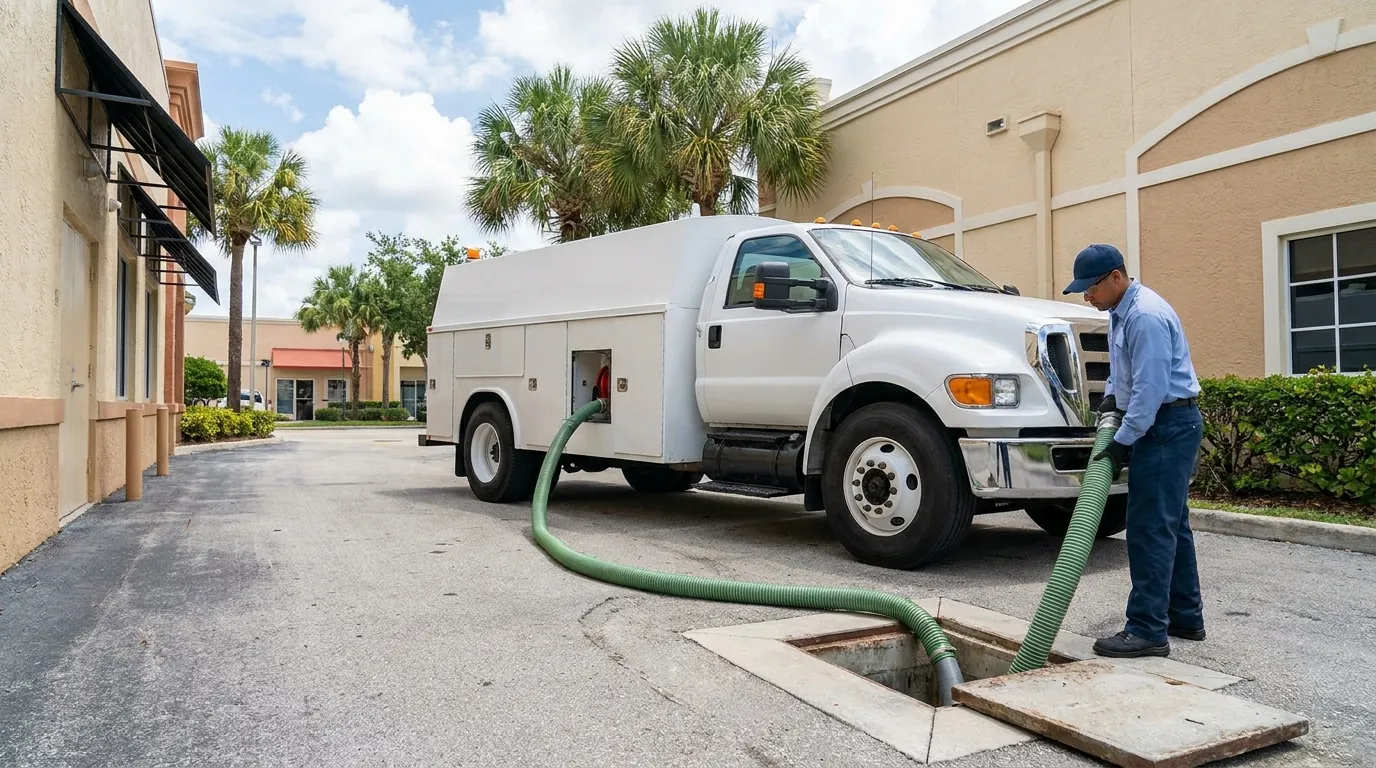
Grease trap pumping empties the trap of accumulated grease and solids and restores its capacity to separate. For a busy kitchen this is not optional maintenance, it is what keeps the drains flowing during service. A trap that overflows into the lines can shut a kitchen down at the worst possible time.
Lakeland kitchens on septic systems have an extra reason to keep the trap clean: grease that escapes toward the tank and drain field is especially damaging in our sandy, high-water-table soil. If your kitchen runs on septic, pairing trap service with regular septic tank pumping protects the whole system.
Signs a trap is overdue
The warning signs are hard to miss in a working kitchen. Slow-draining sinks and floor drains, gurgling, grease odors near the trap or in the kitchen, and grease visible at the trap surface all indicate the trap is at or near capacity. Frequent line clogs behind the kitchen are a strong sign grease is escaping the trap.
How fast a trap fills depends on volume and menu, a high-fry, high-volume kitchen fills far faster than a light-use operation. Rather than guessing, most kitchens settle into a fixed interval that keeps the trap well under capacity between visits. If the trap has already caused a backup, that is a septic emergency service situation on a septic property.
How trap pumping works
A trap service is straightforward but should be done completely, not skimmed.
-
Open the trap
We access the trap, whether an under-sink unit or an outdoor in-ground interceptor, and check the current grease and solids levels.
-
Pump it fully
The vacuum removes the entire contents, the floating grease, the water, and the settled solids at the bottom, not just the top layer.
-
Scrape and inspect
We scrape the walls, baffles, and lid, then inspect for damaged baffles or seals that would let grease through.
-
Confirm and reseal
We verify the trap is empty and functioning, reseal the lid, and note a service interval that fits your kitchen's volume.
Setting a schedule that works
The goal is a trap that never reaches capacity between services. We help you set an interval based on your kitchen's actual volume, then keep to it so grease never has the chance to reach your drain lines. On septic properties, coordinating trap service with a septic system inspection keeps grease from ever loading the tank and field.
Contact us to arrange grease trap pumping for your Lakeland-area kitchen, and we will help you land on a schedule that keeps service running without surprise clogs.
Frequently asked questions
How often should a grease trap be pumped?
It depends on the kitchen's volume and menu. A busy, grease-heavy kitchen may need frequent service while a light-use operation goes longer. The right interval keeps the trap well under capacity so grease never reaches the drain lines.
What happens if a grease trap is not pumped?
Grease overflows past the trap into the drain lines, where it hardens and restricts flow. That leads to slow drains, odors, and backups behind the kitchen, and on septic properties it loads the tank and drain field with grease that the soil cannot handle.
Do you handle both under-sink and in-ground traps?
Yes. Both types work on the same principle and both need to be pumped fully, removing the floating grease, the water, and the solids at the bottom rather than skimming only the surface layer.
My kitchen is on septic. Does the trap matter more?
It matters a great deal. Grease that escapes the trap toward the septic tank and drain field is especially damaging in Lakeland's sandy, high-water-table soil. Keeping the trap clean protects the whole septic system.
Talk to someone about your job
Call to describe the problem and get a quote for work in Lakeland, FL.