Septic System Inspection in Lakeland, FL
Septic system inspection in Lakeland, FL. Find problems early, plan repairs, and understand how sandy soil and a high water table stress your system.
When an inspection pays off
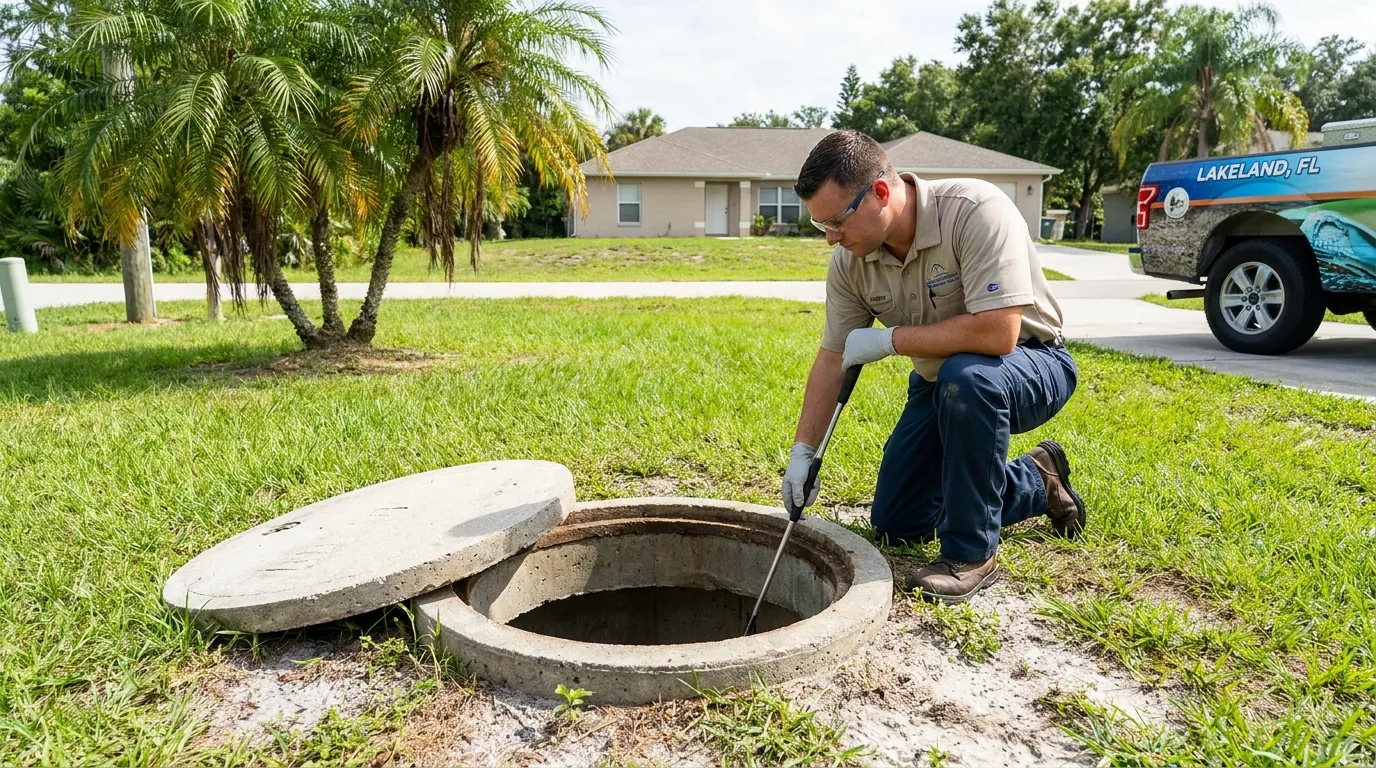
A septic system inspection is a structured check of every part of the system: the tank and its compartments, the inlet and outlet baffles, the sludge and scum levels, the outlet filter, the distribution box, and the drain field. The goal is to catch the failures that homeowners never see from inside the house until sewage is already backing up.
People book inspections for three main reasons. The most common is buying or selling a home, where you want to know what you are inheriting before closing. The second is recurring trouble, slow drains or odors, that pumping alone has not solved. The third is simple due diligence on an older system that has never been documented.
In Lakeland, an inspection means paying special attention to the drain field, because our high water table and sandy soil are hard on it. If the inspection turns up a struggling field, the next step is often drain field service; if the tank itself is at fault, we can move on to septic system repair or a septic tank cleaning.
What we look for
The tell-tale signs of a system in trouble are not always dramatic. A high liquid level in the tank suggests the outlet or field is not accepting flow. Corroded or broken baffles let solids escape into the field, which is the leading cause of premature field failure. Effluent that is cloudy at the outlet, roots at the inlet, or a spongy, always-green patch of yard all get noted and photographed.
Because so much depends on the soil around the field, we factor in the season. A field that looks marginal in the dry spring can fail outright in the summer wet season, so we flag borderline results rather than passing them. If you have noticed slow-downs after rain, our guide on signs your septic tank is full covers what to watch between inspections.
How the inspection runs
An inspection is more involved than a pump-out and follows its own sequence.
-
Records and layout
We confirm tank size, age if known, and the general layout so we know where the tank, distribution box, and field lines run.
-
Open and measure
We open the access lids, measure sludge and scum depth, and check the liquid level against the outlet. A tank running high is an early warning.
-
Baffle and filter check
Both baffles and any outlet filter are inspected for corrosion, breakage, or clogging. These small parts protect the whole field.
-
Field evaluation
We walk and probe the drain field for saturation, odor, and surfacing effluent, weighing the results against the current season and water table.
-
Findings and options
You get a plain-language summary of what is working, what is marginal, and what needs repair, with the reasoning behind each call.
Deciding what happens next
An inspection is only useful if it leads to a clear decision. Minor issues, like a missing outlet filter or an overdue tank, are cheap to correct. A failed baffle is a targeted septic system repair. A saturated or clogged field is the more serious finding and is handled through drain field service. Routine cases usually resolve with septic tank pumping on a sensible interval.
Schedule a septic system inspection in Lakeland or a nearby town, whether you are buying, selling, or just want to know where your system stands before the next wet season.
Frequently asked questions
When should I get a septic inspection?
Before buying or selling a home, after any recurring backup that pumping did not fix, and periodically on older systems. In Lakeland, inspecting before the summer wet season gives you time to act on borderline findings.
Does an inspection include pumping?
An inspection can be paired with a pump-out, and often is, since an empty tank gives the clearest view of the baffles and walls. We can measure sludge and scum without pumping, but pumping lets us inspect more thoroughly.
Can an inspection tell me if my drain field is failing?
It can identify strong warning signs, saturation, surfacing effluent, and high tank liquid levels, and weigh them against the season and water table. A definitive field diagnosis sometimes needs follow-up during the wet months when the field is under the most stress.
What happens if the inspection finds a problem?
You get a plain-language explanation and a set of options ranked from cheapest to most involved. Many findings are minor, and we always separate what needs attention now from what can be monitored.
Talk to someone about your job
Call to describe the problem and get a quote for work in Lakeland, FL.