Drain Field Service in Lakeland, FL
Drain field service in Lakeland, FL. Understand field failure, warning signs, and how sandy soil and a high water table stress your septic drain field.
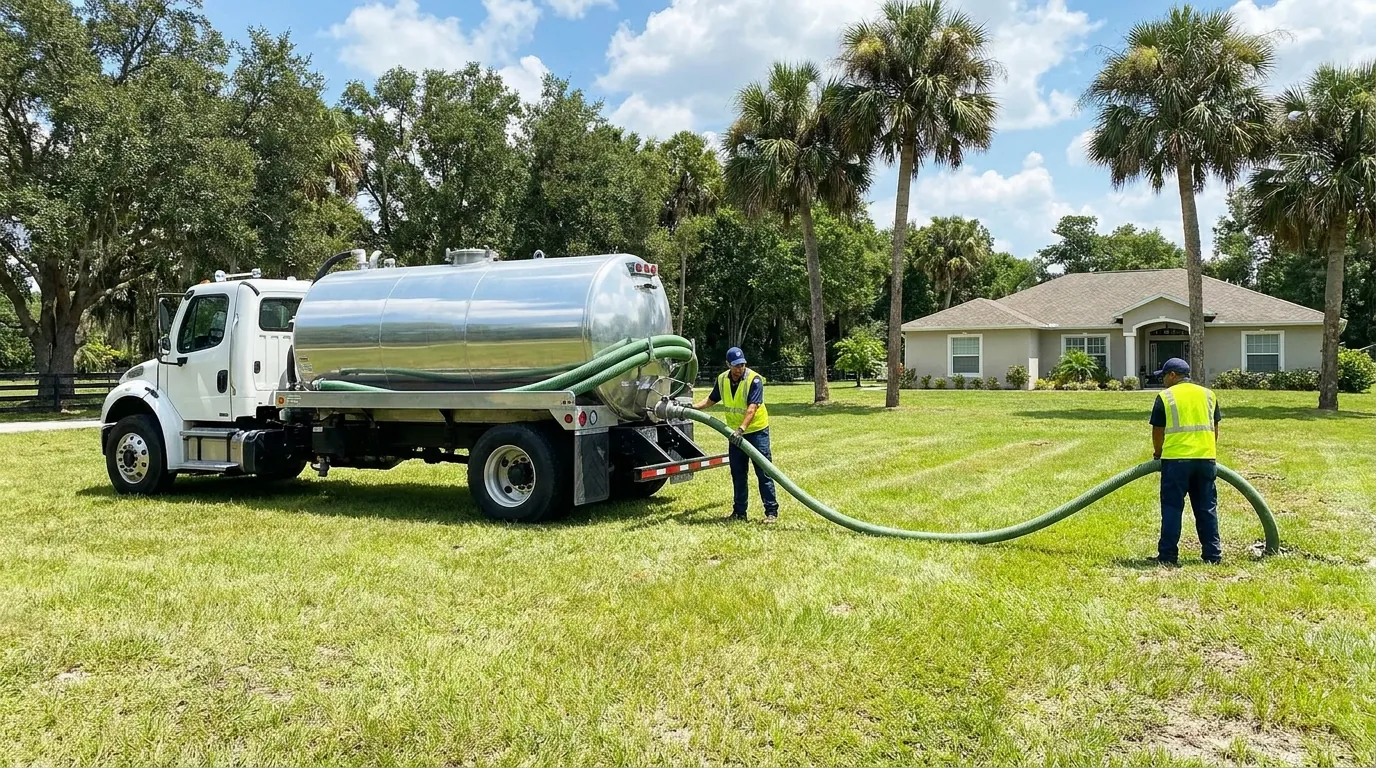
The most vulnerable part of your system
The drain field is where treated effluent leaves the tank and soaks into the soil. It is the most expensive part of a septic system and the part that fails first, especially in Lakeland. Sandy soil drains quickly in dry weather, but our high water table means the ground around many fields is saturated for stretches of the year. A saturated field cannot accept effluent, so wastewater has nowhere to go and backs up toward the house or surfaces in the yard.
Two things kill drain fields: saturation and solids. Saturation is a seasonal and site condition we work around. Solids are avoidable, they reach the field when a tank is overdue or its baffles have failed, and they clog the soil permanently. That is why field care starts with the tank. Keeping up with septic tank pumping is the single most effective thing you can do to protect the field.
When a field is already struggling, the first step is diagnosis, often through a septic system inspection, to separate a temporary wet-season saturation problem from a truly clogged field.
Signs of drain field trouble
Field problems announce themselves in the yard. A patch of grass over the field that stays greener, lusher, and spongier than the rest is a classic early sign. Standing water or a sewage smell over the field, drains throughout the house that slow at the same time, and backups that get worse after rain all point to a field that is not accepting flow.
In Lakeland these signs often follow the rain calendar. A field that copes fine in the dry spring can surface effluent in the summer wet season when the water table rises. If your trouble appears only after storms, read our guide on septic care during heavy rain, because managing water load is often part of the fix.
How we approach a drain field
Field service is about accurate diagnosis first, because the right action depends entirely on the cause.
-
Check the tank first
We confirm the tank is not overdue and the baffles are intact. A failing tank sends solids to the field, and no field work lasts while that continues.
-
Evaluate saturation
We assess how much of the symptom is seasonal saturation from the high water table versus a genuinely clogged soil layer.
-
Inspect the distribution
We look at the distribution box and lines to see whether effluent is spreading evenly or overloading one section of the field.
-
Reduce the load
Where saturation is the driver, we advise on diverting surface and roof runoff away from the field and easing water use through the wet season.
-
Plan the repair
If the soil is truly clogged, we lay out the realistic options and the reasoning, so you understand what the field needs before any work begins.
What to do next
If your yard is soggy over the field, drains are slowing house-wide, or backups worsen with rain, do not wait. Catching a field problem early, while it is still partly seasonal saturation, gives you far more options than waiting until the soil is fully clogged. Start with an septic system inspection so the cause is clear, and keep the tank on a steady pumping schedule to stop new solids from reaching the soil. An active backup is a septic emergency service situation.
Contact us for drain field service anywhere in Lakeland and the surrounding towns, and we will help you understand exactly what your field is telling you.
Frequently asked questions
Why do drain fields fail in Lakeland?
The two main causes are saturation from our high water table during the wet season and solids reaching the field from an overdue or failing tank. Sandy soil drains well when dry but has little margin when the ground is already wet.
Can a clogged drain field be fixed?
It depends on the cause and severity. Fields overwhelmed by seasonal saturation often recover when water load is reduced and the tank is kept clean. Soil clogged by years of solids is a more serious repair, which is why early diagnosis matters.
Does pumping the tank help the drain field?
Pumping on schedule prevents solids from reaching the field in the first place, which is the best protection you have. Once solids have already clogged the soil, pumping relieves symptoms temporarily but does not restore the field on its own.
Why is my field worse after heavy rain?
When the water table rises with summer rains, the soil around the field is already saturated and cannot absorb more effluent. Diverting roof and surface runoff away from the field and easing water use during storms both help.
Talk to someone about your job
Call to describe the problem and get a quote for work in Lakeland, FL.