Septic Tank Cleaning in Lakeland, FL
Septic tank cleaning in Lakeland, FL. Learn how cleaning differs from pumping, why heavy sludge builds up, and how local soil affects your system.
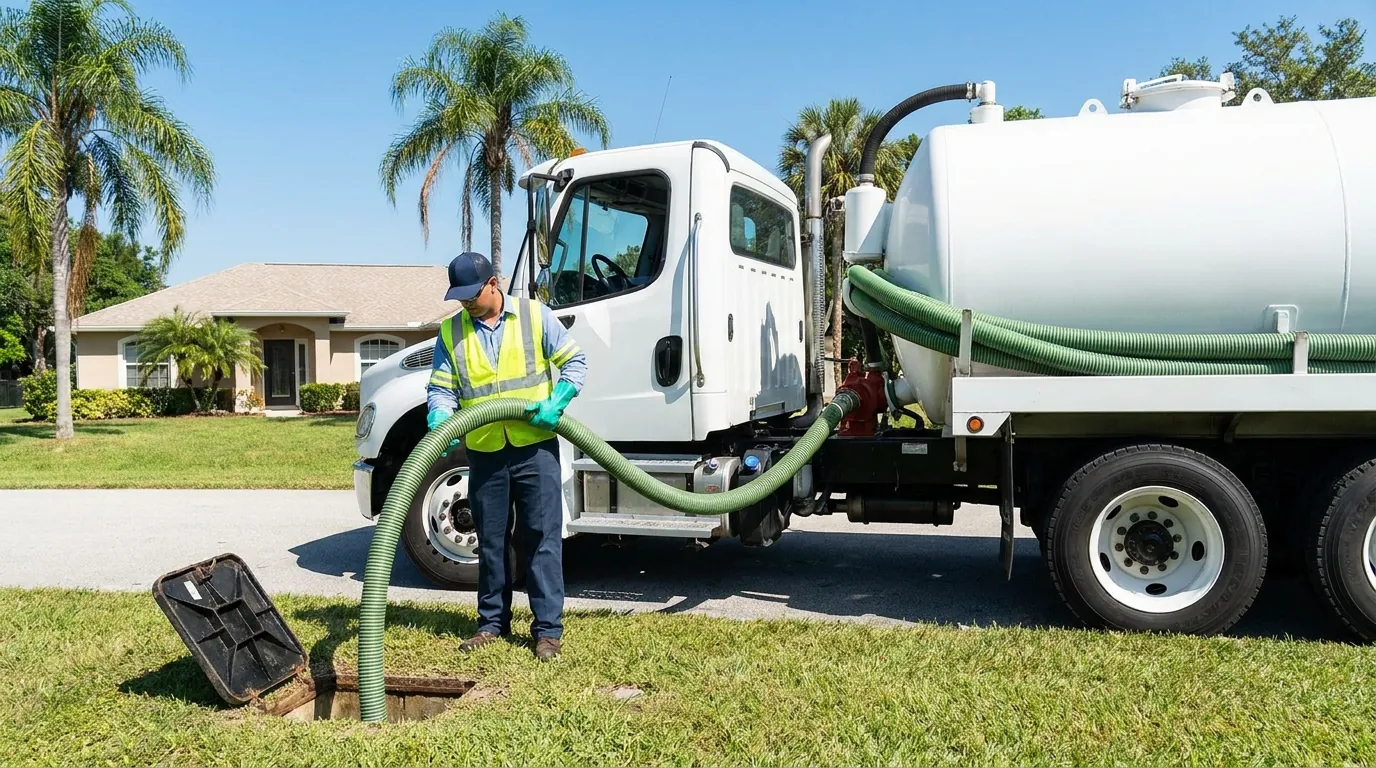
Cleaning versus pumping
People use pumping and cleaning interchangeably, but there is a real difference. A pump-out removes the liquid and the loose sludge and scum. Cleaning a septic tank goes further: it breaks up and removes the compacted sludge that settles hard against the tank floor and the greasy crust that forms on the surface, material a straight vacuum pass will leave behind.
Cleaning matters most on tanks that are years overdue, on rental or vacation properties that were used heavily then left idle, and on systems that have never had the compacted bottom layer disturbed. On these tanks a simple pump looks complete but leaves inches of hardened solids that keep the effective volume low and push solids toward the field.
In Lakeland, the case for a proper cleaning of the septic tank is stronger because our high water table gives the drain field so little margin. Any solids that carry over into already-saturated sandy soil clog it fast. Cleaning restores the full settling volume so the tank does its job. If the tank turns out to be structurally worn, cleaning is the moment we recommend a septic system inspection.
Signs a tank needs more than a pump
Some clues point to cleaning rather than a routine pump. A tank that was pumped recently but backed up again soon after often still holds compacted sludge. A thick, mat-like scum crust that resists the vacuum, strong persistent odors, and a bottom layer that measures deep even after pumping all indicate the tank needs the harder clean.
Because Lakeland systems sit in wet, sandy ground, a tank that is not fully cleaned keeps overloading the field year after year. If you have already had backups, our page on drain field service explains what happens when solids reach the soil, and the signs your septic tank is full guide covers what to watch for between visits.
How cleaning works
Cleaning a tank builds on the pumping process and adds the steps needed to remove stubborn buildup.
-
Full pump-out first
We remove all liquid and loose solids so the compacted layers are exposed and reachable.
-
Break up the sludge
The hardened bottom layer is agitated and loosened, sometimes with water added back to suspend it, so the vacuum can lift it out.
-
Clear the scum crust
The greasy surface mat is broken up and removed rather than left floating, which is where a plain pump often falls short.
-
Rinse and check components
With the tank clean we rinse the walls and inspect the baffles, outlet filter, and inlet for damage or clogging.
-
Confirm a clean tank
We verify the tank is genuinely empty of compacted material and reseat the lids, so you start the next cycle from zero.
What to do next
If your tank is long overdue, backed up again soon after a pump, or has never had the bottom layer cleared, book a cleaning rather than a routine pump. Once the tank is clean, staying on a sensible septic tank pumping schedule keeps you from ever needing the deep clean again. A backup already underway is a septic emergency service call.
Reach out to schedule septic tank cleaning in Lakeland and the nearby towns, and we will tell you honestly whether a cleaning or a standard pump is what your tank actually needs.
Frequently asked questions
What is the difference between septic tank cleaning and pumping?
Pumping removes the liquid and loose solids. Cleaning also breaks up and removes the compacted sludge on the tank floor and the greasy scum crust that a straight vacuum leaves behind. Cleaning restores the tank's full working volume.
How do I know if I need cleaning instead of pumping?
If the tank was pumped recently but backed up again, has a thick crust, or measures deep at the bottom even after pumping, it needs cleaning. Neglected and heavily used tanks are the usual candidates.
Does cleaning damage the good bacteria in my tank?
The beneficial bacteria in a septic system re-establish quickly from normal household wastewater after any pump or clean. You do not need additives to restart the process; regular use repopulates the tank on its own.
How often should a tank be cleaned?
Most households never need a full cleaning if they pump on a regular schedule. Cleaning is a corrective step for tanks that have fallen years behind or been overloaded, not a routine every-time service.
Talk to someone about your job
Call to describe the problem and get a quote for work in Lakeland, FL.