Septic Emergency Service in Lakeland, FL
Septic emergency service in Lakeland, FL for backups and overflows. Learn what to do first, what causes emergencies, and how to prevent the next one.
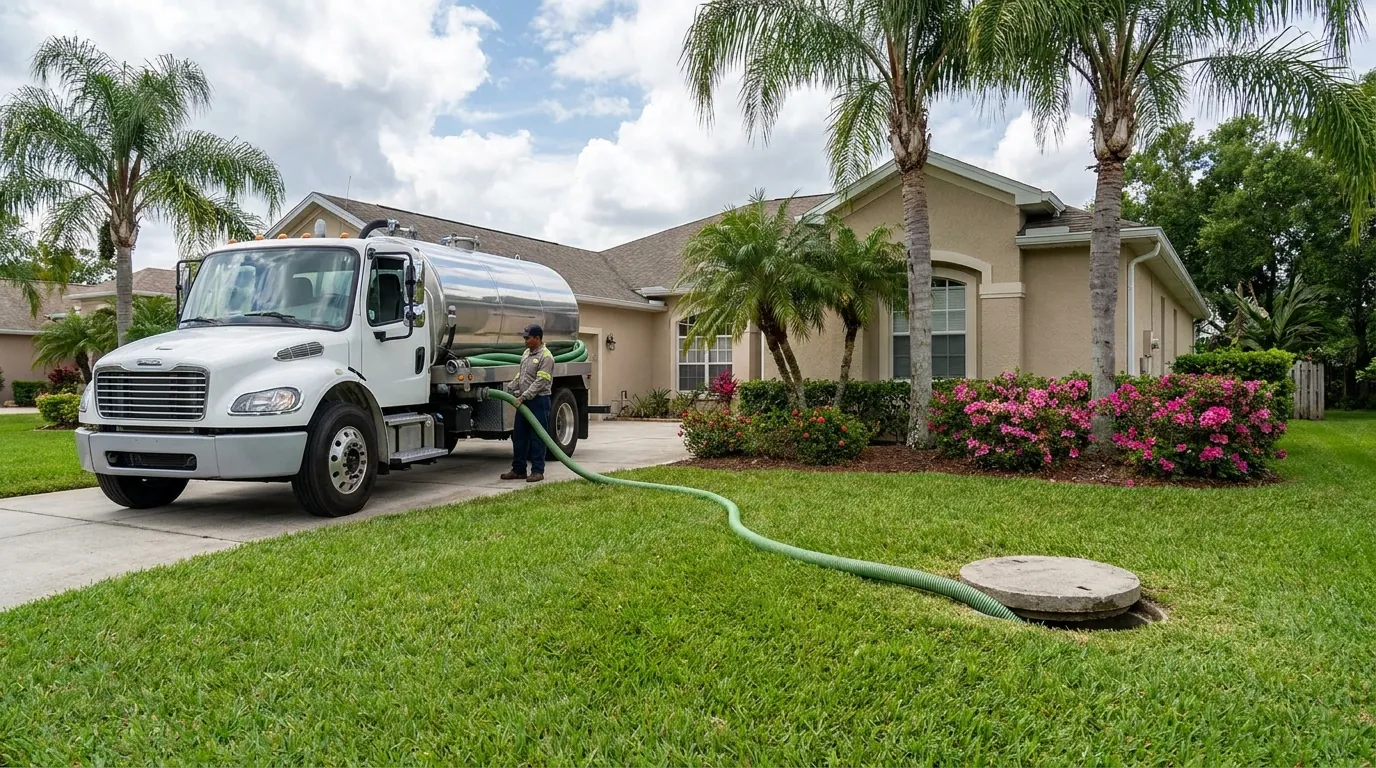
When it can't wait
Some septic problems are inconveniences and some are emergencies. Sewage backing up into tubs, showers, or floor drains, a toilet that will not clear and overflows, sewage surfacing over the tank or drain field, and strong sewage odors indoors all qualify. These are health hazards, and they get worse the longer wastewater has nowhere to go.
The immediate priority in an emergency is to stop adding water. Stop using every fixture, sink, shower, dishwasher, and washing machine, because each one pushes more wastewater into a system that already cannot accept it. Keep people and pets away from any surfacing sewage. Then get the system pumped down so the pressure is relieved and the cause can be found.
Many Lakeland emergencies are seasonal. When the summer rains raise the water table, a drain field that was coping suddenly cannot absorb effluent and the whole system backs up. Understanding that pattern is why our drain field service and septic care during heavy rain guide are closely tied to emergency work.
What causes septic emergencies here
Most emergencies trace back to one of a few causes. A tank that was overdue for pumping finally fills and backs up. A failed baffle or clog sends solids into the field and stops it accepting flow. A saturated drain field during the wet season has nowhere to send effluent. Or a physical blockage in the line traps everything behind it.
In Lakeland, the high water table turns borderline systems into emergencies during the rainy months. A system running near its limit in the dry season can fail the first heavy week of summer storms. That is why we treat prevention, staying current on septic tank pumping and watching the field, as part of emergency service, not separate from it.
How we respond
An emergency call follows a fast, focused sequence to relieve the problem and find the cause.
-
Stop the inflow
We confirm all fixtures are off so nothing adds to the backup while we work, which alone often relieves indoor backup pressure.
-
Pump the system down
Pumping the tank removes the immediate overload, stops the backup, and gives us a clear view of what is happening inside.
-
Find the cause
With the tank down we check baffles, outlet, line, and field to determine whether the cause is a full tank, a blockage, or a saturated field.
-
Stabilize and advise
We get the household usable again where possible and explain clearly what caused the emergency and what it takes to prevent a repeat.
After the emergency
Relieving the backup is only half the job. The lasting fix depends on the cause: an overdue tank needs a return to a steady septic tank pumping schedule, a compromised field needs drain field service, and an unclear picture calls for a septic system inspection once the crisis has passed.
If you have sewage backing up or surfacing right now in Lakeland or a nearby town, call for septic emergency service. Stop using water, keep clear of any spill, and we will help you relieve the system and understand what went wrong.
Frequently asked questions
What should I do first during a septic backup?
Stop using all water immediately, every sink, shower, toilet, dishwasher, and washing machine, because each one adds to the backup. Keep people and pets away from any surfacing sewage, then call for emergency pumping to relieve the system.
Why did my septic back up after heavy rain?
When Lakeland's summer rains raise the water table, the soil around the drain field is already saturated and cannot absorb effluent, so wastewater backs up. A system running near its limit in dry weather often fails during the first heavy storms.
Will emergency pumping fix the problem for good?
Pumping relieves the immediate backup and stops the overflow, but it treats the symptom. Whether it lasts depends on the cause, an overdue tank, a failed baffle, or a saturated field, which we identify so you can address the root problem.
How can I avoid septic emergencies?
Stay current on pumping, watch for early warning signs like slow drains and soggy spots over the field, and manage water load during the wet season. Most emergencies are the end result of a problem that showed warning signs for weeks.
Talk to someone about your job
Call to describe the problem and get a quote for work in Lakeland, FL.